
Skip to content

How Mirro’s Empathy AI Detects Human Emotions: A Full Breakdown

mirro.ai

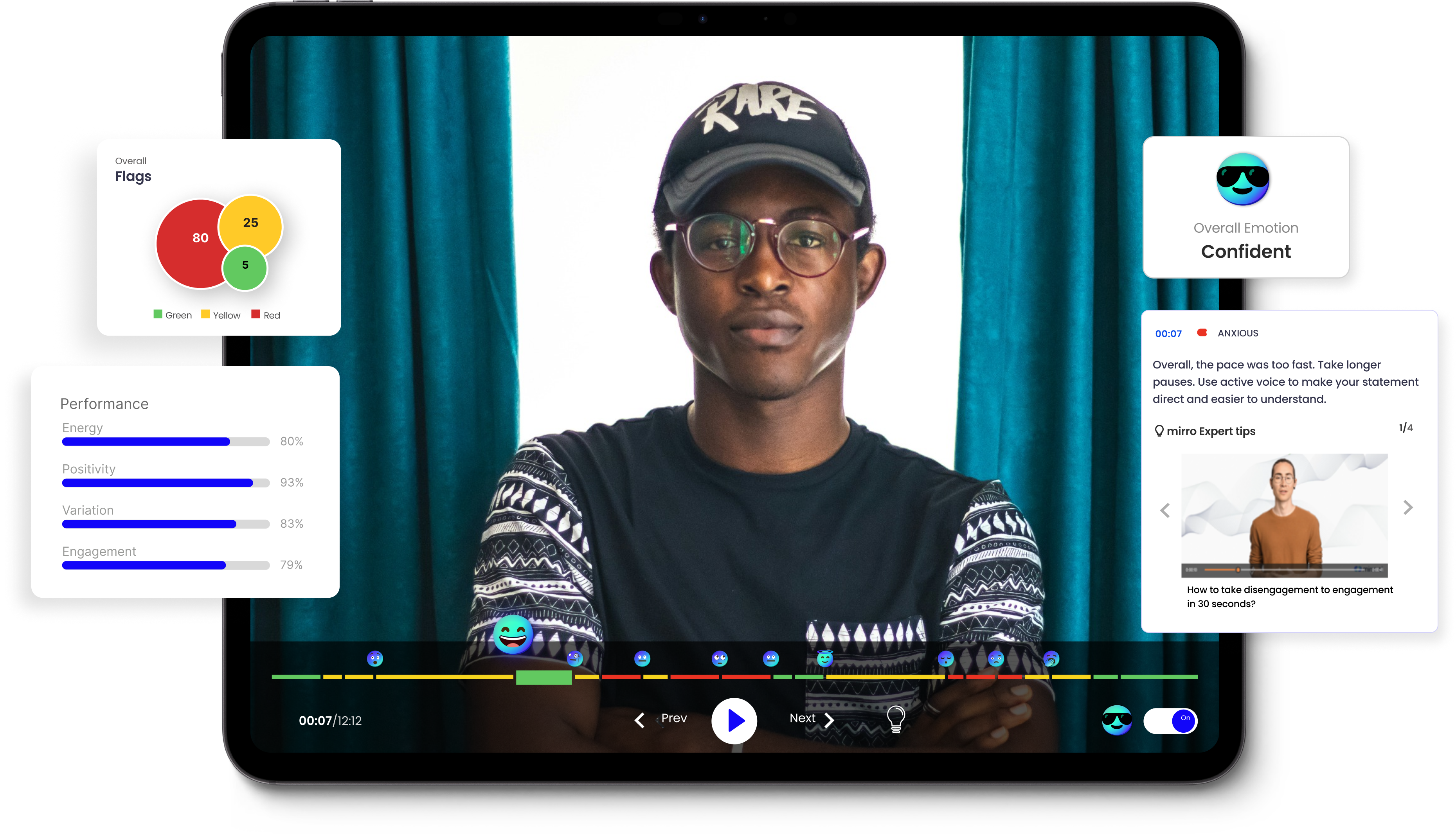
mirro’s Empathetic AI Listener provides real-time insights into end-user emotions by analyzing non-verbal cues, helping you deliver more compassionate and effective interactions.

How Does mirro AI Detect Emotions?

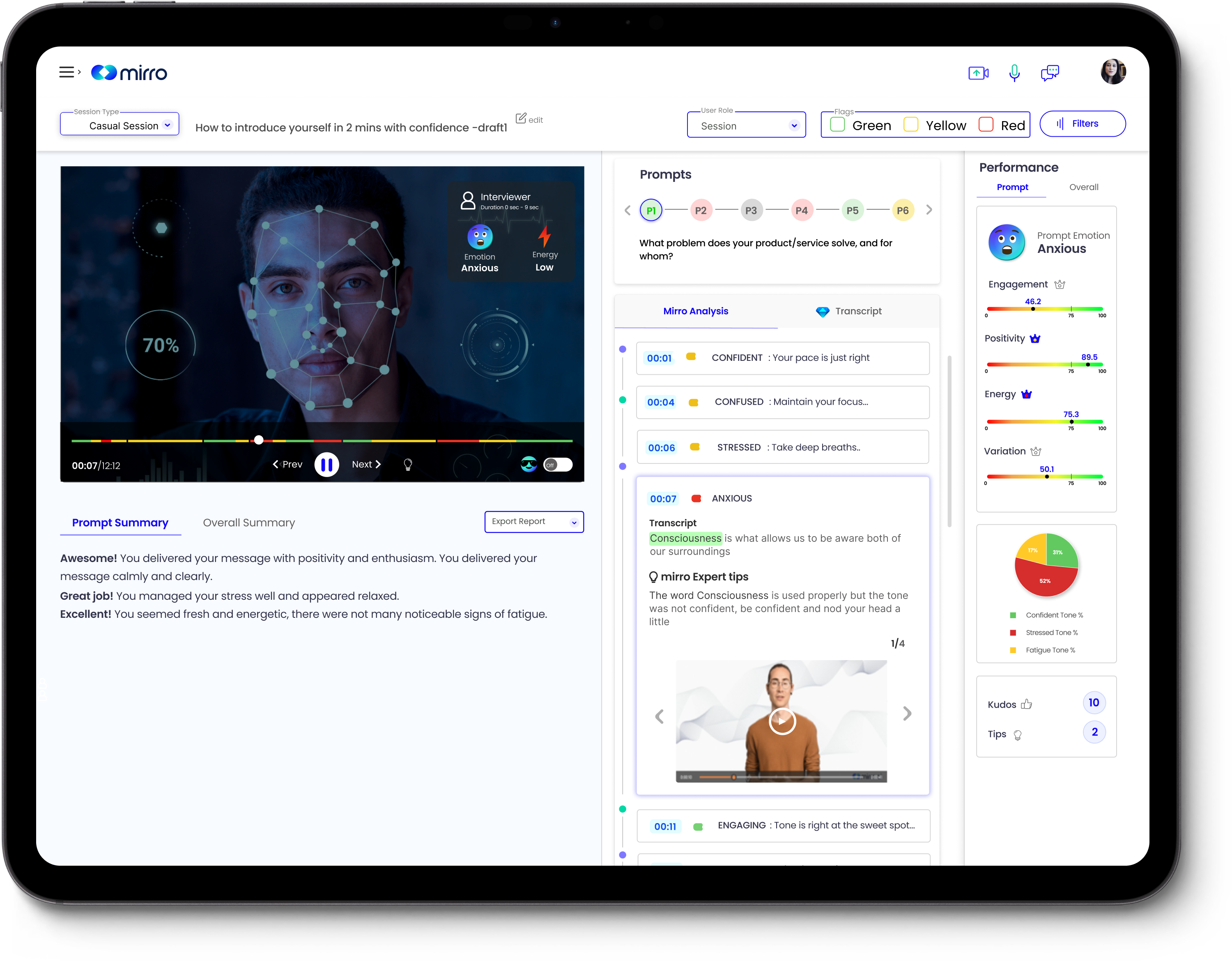
mirro AI detects emotions through a combination of advanced technologies and methodologies that analyze various inputs to infer the emotional state of an end-user. Here’s a breakdown of how this process works
mirro.ai

Voice Analysis

  • Featured icon
    Pitch and Tone

    AI algorithms analyze the pitch, tone, and modulation of a person’s voice. Changes in these elements can indicate different emotional states, such as stress, happiness, anger, or sadness

  • Featured icon
    Speech Rate

    The speed at which someone speaks can provide clues about their emotional state. For example, a faster speech rate may indicate excitement or anxiety, while a slower rate might suggest sadness or calmness

  • Featured icon
    Volume and Intensity

    Variations in volume and intensity can signal emotions. Loud and intense speech might indicate anger or excitement, whereas softer speech might indicate sadness or uncertainty

Facial Expression Recognition​

  • Featured icon
    Micro-Expressions

    AI systems can detect subtle facial expressions that last only a fraction of a second. These micro-expressions can reveal true emotions that a person might try to conceal

  • Featured icon
    Facial Landmarks

    By tracking facial landmarks (such as the corners of the mouth, eyes, and eyebrows), AI can interpret expressions related to specific emotions like smiling, nodding for engagement or frowning for stress.

Body Language Analysis​

  • Featured icon
    Posture and Gestures

    AI can analyze body posture and movements to infer emotions. For instance, crossed arms might indicate defensiveness, while open body language might suggest openness and comfort

  • Featured icon
    Hand Movements

    Gestures such as waving, pointing, or using hands while speaking can provide additional context to the spoken words and reveal underlying emotions

Text Analysis

  • Featured icon
    Sentiment Analysis

    AI uses natural language processing (NLP) to analyze text for word sentiment and emotion conveyed through words, either spoken or written.

  • Featured icon
    Mindset Markers

    By examining the context in which words are used, AI can infer mindset patterns like adaptability, empathy, learning approach, stress management approach etc.

Multimodal Emotion Detection

  • Featured icon
    Combining Inputs

    AI systems often combine multiple inputs (voice, facial expressions, body language, and text) to provide a more accurate and comprehensive assessment of emotions. This multimodal approach ensures that the emotion detection is robust and reliable

  • Featured icon
    Contextual Integration

    By integrating various inputs, AI can understand the context better and make more nuanced interpretations of emotional states

What Emotions mirro Can Detect?

mirro’s advanced AI technology is designed to detect a wide range of emotions by analyzing various verbal and non-verbal cues. Here are the key emotions that mirro can identify

  • Engagement: Indicated by a cheerful tone of voice, smiling, and positive language.
  • Excitement: Detected through an enthusiastic tone, rapid speech, and energetic body language.
  • Contentment: Identified by a calm, steady tone and relaxed facial expressions.
  • Calm Rationality: Recognized by a steady, composed tone and relaxed body language.
  • Thinking, reasoning: Indicated by a specific tone of voice, pauses and facial expressions.
  • Stress: Detected through a tense tone, rapid speech, pitch and nervous gestures.
  • Anxiety: Indicated by a shaky or high-pitched tone, frequent pauses, and restless movements.
  • Fatigue/ low energy: Recognized by a slow, soft tone, downward gaze, and slumped posture.
  • Disengagement: Detected by a strained or flat tone, frequent sighing, and rigid posture, distracted gaze.
  • Fear: Recognized by a high-pitched, trembling tone, and defensive body language.

Emotional Flags

To help healthcare providers and service operators make informed decisions, Mirro groups these emotions into different flags

  • green

    Green Flag

    – Happiness

    – Excitement

    – Contentment

  • yellow

    Yellow Flag

    – Calmness

    – Reasoning

    – Thinking

  • red

    Red Flag

    – Stress

    – Anxiety

    – Fatigue

How mirro Uses These Insights?

By accurately detecting and analyzing these emotions, Mirro enhances the ability of healthcare providers, customer service teams, and other professionals to understand and respond to the emotional needs of their end-users.

  • Real-Time Feedback:

    mirro provides real-time feedback on the detected emotions, helping service providers respond appropriately.

  • Decision-Making:

    Based on the emotional flags, providers can assess the severity of the symptons and priority of the care and on the best course of action. For example, if a red flag is detected, immediate intervention may be required.

  • Personalized Care:

    Understanding the emotional state of end-users allows providers to offer more personalized and empathetic care, improving overall satisfaction and outcomes.